

Building operational forecasting capacity through long-term institutional collaboration
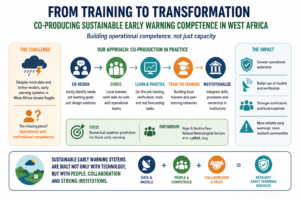
Early warning systems are based on weather forecasts, numerical models, data platforms and technological innovation. Yet experience shows that technology alone is not enough. The effectiveness and sustainability of early warning services ultimately depend on the ability of institutions to operate, assess, adapt and maintain forecasting systems within their daily activities.
Recognising this challenge, the SLAPIS Sahel initiative promoted an innovative capacity-development pathway involving the Direction Nationale de la Météorologie (DNM) of Niger, the Agence Nationale de la Météorologie (ANAM) of Burkina Faso, the Tuscany Regional Meteorological Service (LaMMA), the Institute for BioEconomy of the Italian National Research Council (IBE-CNR), and the WMO Regional Training Centre in Italy.
The objective was not simply to transfer technical knowledge, but to strengthen operational competence through a process of co-production. Building on more than a decade of collaboration between the institutions involved, forecasting experts, modelers, IT specialists, managers and trainers worked together to identify operational needs, define priorities, develop solutions and progressively integrate them into institutional workflows. The process started long before the training activities themselves, through continuous dialogue and joint reflection on how to strengthen forecasting capabilities in support of flood early warning services.
A cornerstone of the experience was the long-term embedding of African modelers within the operational forecasting team of LaMMA. Rather than attending isolated training courses, trainees became part of a real operational environment where they participated in the installation, configuration, operation, verification and interpretation of numerical weather prediction systems. Working side-by-side with forecasters and model developers enabled learning to be directly connected to real operational challenges and decision-making processes.
The approach combined on-the-job learning, training-of-trainers activities, routine forecast verification and continuous interaction between teams in Niger, Burkina Faso and Italy. Through this process, participants progressively acquired greater autonomy in managing forecasting systems, while institutions strengthened their capacity to maintain, evaluate and further develop operational services.
An important outcome of the initiative was the strengthening and institutionalisation of long-term partnerships. During the project, LaMMA signed cooperation agreements with both DNM Niger and ANAM Burkina Faso, providing a framework for continued technical collaboration, staff exchanges, joint innovation activities and mutual support in the development of forecasting and early warning services. These agreements represent a concrete step towards ensuring that capacity development extends beyond the duration of individual projects.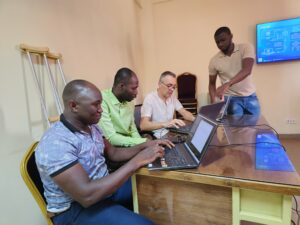
Beyond the technical achievements, the experience fostered trust, peer-to-peer collaboration and the emergence of a regional community of practice connecting meteorological services across national borders. These elements are particularly important in transboundary river basins such as the Sirba, where effective flood early warning depends on coordinated interpretation of forecasts and shared operational procedures among neighbouring countries.
The experience demonstrated that sustainable early warning systems are built not only through technology, but also through competent people, collaborative processes and strong institutions. Operational competence emerged as a key ingredient for transforming weather forecasts into actionable information for disaster risk reduction and climate resilience.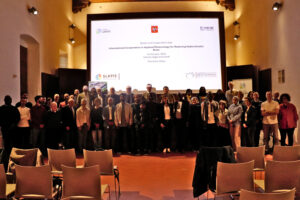
The relevance of this experience was recognised through several international dissemination and knowledge-sharing initiatives. In October 2025, the SLAPIS Sahel project organised the international conference International Cooperation in Applied Meteorology for Reducing Hydroclimatic Risks, bringing together meteorological services, researchers, development agencies and practitioners from Africa and Europe to discuss operational forecasting, early warning systems and capacity development. The conference provided an opportunity to share lessons learned and reflect on the institutional and human dimensions required to sustain forecasting services in resource-constrained contexts.
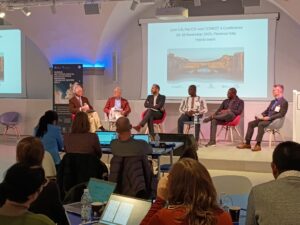
The experience was subsequently selected as the subject of a dedicated panel session during the Joint CALMET XVI and CONECT-3 Conference, where trainees, tutors and institutional representatives discussed the challenges, successes and lessons learned from the collaboration. The reflections emerging from this experience were later consolidated in a scientific paper published in the journal Climate Services, contributing to the international debate on how co-production can support sustainable capacity development for weather and climate services.
For SLAPIS Sahel, strengthening early warning systems means not only improving forecasts, but also investing in the people, partnerships and institutions that transform forecasts into action.